
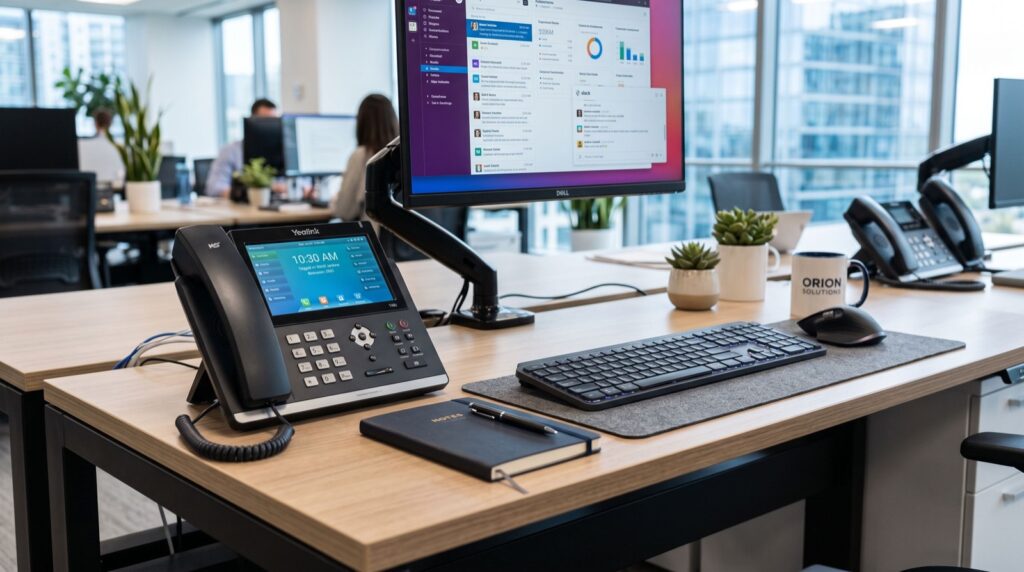
Modern offices in Pakistan are standardising on Fanvil IP phones because they unify voice calling and door access on one flexible SIP network. From executive desk handsets to compact intercoms at the front gate, Fanvil gives businesses a single, cost-effective communication ecosystem.
This guide explains how a VoIP platform ties phones and intercoms together, which Fanvil devices suit each need, and how to plan a rollout that keeps calls clear and premises secure in 2026.
One SIP Network for Calls and Door Access
The real power of VoIP is convergence. Instead of a separate phone system and a separate door-entry system, Fanvil lets both run on the same PBX. A visitor presses a call button at the gate and your reception desk phone rings, ready to answer and buzz them in.
This unified approach lowers cost and simplifies management. When you build your system around fanvil ip phones, adding an intercom or a new extension is just another SIP endpoint on the network you already run.
How Do IP Intercoms Connect to Your Phones?
An IP intercom registers with your PBX exactly like a desk phone. When someone presses its call button, the PBX routes the call to a chosen extension or ring group. This works because both devices speak the same open SIP standard maintained by the ITU Telecommunication Standardization Sector and the wider VoIP community.
The practical benefit is that your staff answer the door from the same handset they use for calls, with no extra wiring or standalone panel.
Compact Door Entry With the Fanvil H2U
For a clean, affordable entry point, the Fanvil H2U compact IP phone is a smart choice. Its small footprint suits reception counters, waiting areas, and back offices, while still delivering HD voice and PoE convenience on the same SIP platform as your larger handsets.
Because it shares the network with your desk phones, staff can transfer calls, join conferences, and reach any extension without learning a new system.
Where Should You Place a Compact IP Phone?
Compact models shine in tight spaces and secondary locations. Use them at store counters, spare desks, meeting rooms, and shared workspaces where a full-size handset would be overkill but reliable calling is still essential.
Choosing the Right Fanvil Devices for Your Building
A well-planned deployment assigns the right device to each area. The table below maps common workplace zones to suitable Fanvil hardware.
| Location | Recommended Fanvil Device | Purpose |
|---|---|---|
| Executive office | Fanvil X210 | High-volume calling |
| Staff desks | Fanvil X3U | Everyday HD calls |
| Counter / small desk | Fanvil H2U | Compact reliable calling |
| Mobile staff | Fanvil W610W | Cordless Wi-Fi mobility |
Features That Make a VoIP System Dependable
When specifying hardware, focus on the features that keep calls clear and management simple. These matter most in a busy Pakistani office.
- Power over Ethernet: Powers phones and intercoms over a single cable.
- HD wideband audio: Delivers crisp, natural-sounding calls.
- Auto-provisioning: Rolls out settings to many devices at once.
- Open SIP compatibility: Works with 3CX, Asterisk, Yeastar, and hosted PBXs.
- Regular firmware updates: Keep your network secure against new threats.
Security is worth extra thought. Keep your VoIP network on a separate VLAN, enforce strong SIP passwords, and disable unused services so your phone system stays protected as it grows.
Your Step-by-Step Deployment Plan
A calm, sequenced rollout prevents the common problems of echo, one-way audio, and misrouted calls. Follow this order.
- Map your needs: List every location that needs a phone or intercom.
- Choose your PBX: Select a hosted or on-premise platform.
- Specify devices: Use the location table to pick the right hardware.
- Set QoS: Prioritise voice traffic across your network.
- Provision and test: Load configurations and verify transfers and call routing.
- Train and go live: Brief staff, then switch over in phases.
Engaging reliable local experts for the design and configuration stage ensures your dial plans, ring groups, and door-entry routing all work correctly from launch. Getting this right the first time saves significant troubleshooting later.
Can I Add Devices Later Without Rebuilding?
Yes. That is the core advantage of SIP. Once your PBX is running, adding a new phone or intercom is a quick provisioning task. Your system scales as your business does, with no forklift upgrades.
Choosing Between Hosted and On-Premise PBX
One decision shapes your whole rollout: where the PBX lives. Both hosted cloud and on-premise servers work perfectly with Fanvil hardware, so the right pick depends on your priorities.
A hosted cloud PBX removes maintenance headaches, scales instantly, and works well for businesses with multiple branches or remote staff. You pay a monthly fee and let the provider handle updates and uptime. An on-premise server such as FreePBX or a Yeastar appliance gives you full control, keeps call data in-house, and can be cheaper long-term for a single large site with steady headcount.
Many Pakistani firms start hosted for speed of deployment, then reassess as they grow. Because Fanvil phones re-provision easily, switching platforms later does not mean replacing your handsets, which protects your hardware investment either way.
Which PBX Type Is Better for a Small Business?
For most small businesses, a hosted PBX is the easier starting point. It needs no server hardware, no on-site maintenance, and it scales with a phone call to your provider. Larger organisations with dedicated IT teams often prefer on-premise for control and data locality.
Frequently Asked Questions
Do all Fanvil devices work on the same system?
Yes. Desk phones, compact handsets, cordless units, and intercoms all use open SIP standards, so they register to the same PBX and share one dial plan. You can mix any combination freely.
Is a compact IP phone as capable as a full-size one?
For calling, yes. A compact model like the H2U handles calls, transfers, and conferencing well. Full-size phones simply add larger screens and more programmable keys for high-volume users.
Can visitors reach staff directly through an intercom?
Yes. An IP intercom can ring a specific extension or a ring group, so the right person answers the door from their desk phone without any separate panel.
How do I keep my VoIP system secure?
Use a dedicated voice VLAN, strong SIP credentials, and current firmware. Restrict remote access and monitor call logs so unusual activity is caught early.
Conclusion: Unify Calling and Access With Fanvil
Building on Fanvil IP phones lets your business run voice calls and door access on one dependable SIP network throughout 2026. Match each device to its location, prioritise clear audio and security, and lean on expert setup for a flawless launch.
Ready to bring your communications together? Explore the full Fanvil range, plan the devices your building needs, and request a quote today to start enjoying unified, professional VoIP.