Solar Installation in Islamabad: What It Costs in 2026
Islamabad gets cold winters and hot summers, and both extremes push electricity bills higher for heating or cooling. More residents are now choosing solar installation in Islamabad to stabilize those costs, and the twin city of Rawalpindi is seeing the same shift as IESCO tariffs continue to climb in 2026.
This guide compares what homeowners in both cities are actually paying, how net metering works through IESCO, and what separates a dependable installer from one that disappears after the sale. It also covers financing options, since upfront cost is still the single biggest reason many families delay a decision they otherwise know makes financial sense.
Both cities share the same utility, IESCO, which means the paperwork and tariff structure are identical whether your roof sits in Bahria Town Islamabad or Satellite Town Rawalpindi. What differs in practice is roof layout, shading from neighbouring buildings, and how quickly a particular district’s net metering queue moves.
Why Solar Installation in Islamabad Is Booming in 2026
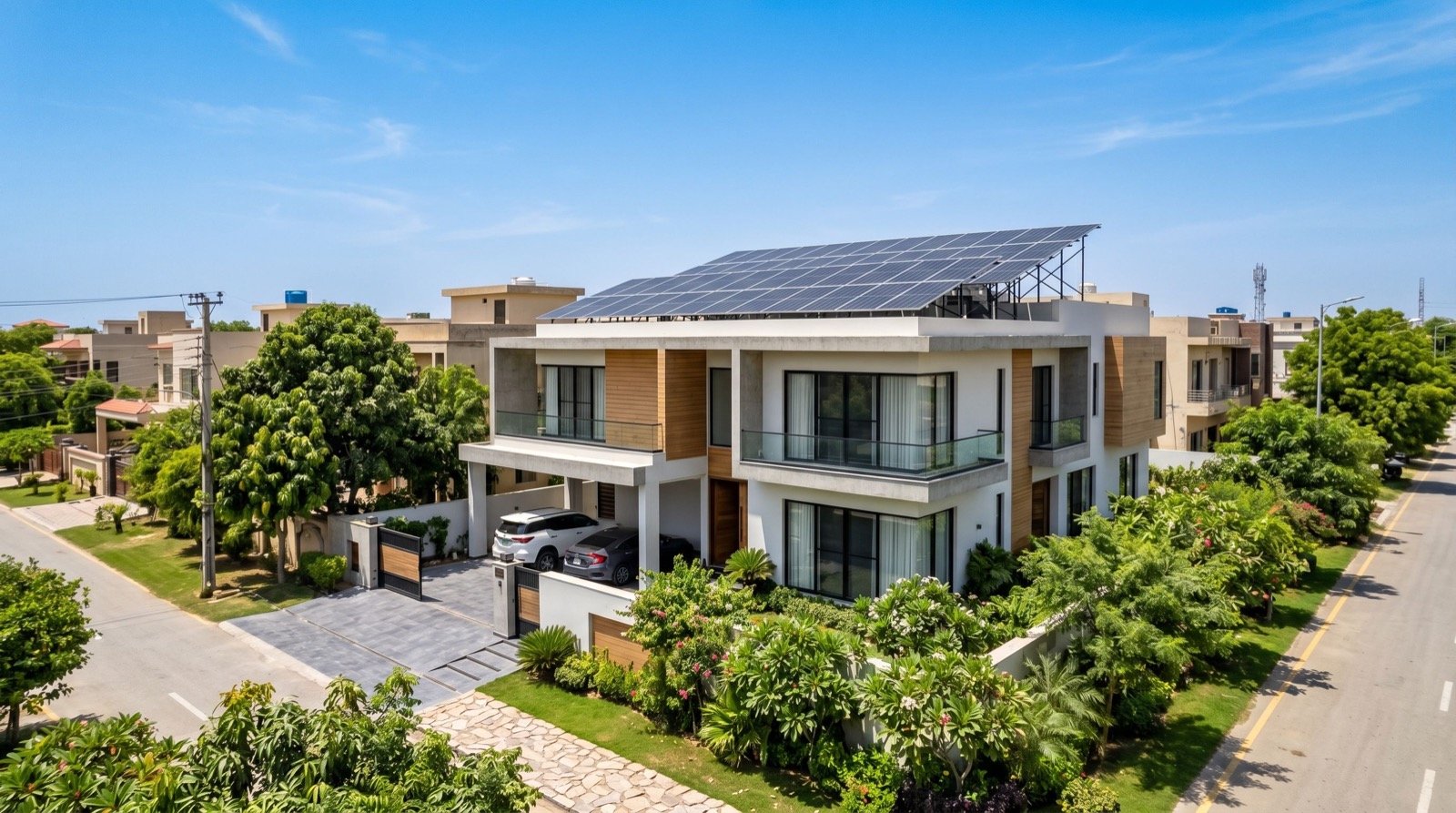
Islamabad sits at a higher elevation than most Pakistani cities, which keeps panels slightly cooler and, counterintuitively, helps efficiency during peak summer months. Combined with wide rooftops on many houses in sectors like E-11, F-10, and G-13, the city has ideal conditions for rooftop solar.
Data compiled through the NASA POWER project shows the Islamabad-Rawalpindi region receives strong solar irradiance for most of the year, with only a modest dip during the monsoon months of July and August.
- More predictable monthly bills despite seasonal tariff changes
- Shorter payback periods thanks to strong year-round sun
- Added property value for resale in a competitive housing market
- Reduced reliance on backup generators during winter fog-related outages
How Does Net Metering Work With IESCO?
Net metering allows a household to export unused solar power to the grid and receive a bill credit in return. IESCO follows the national net metering framework, and the practical steps are fairly consistent across the twin cities:
- A licensed installer surveys your roof and designs a system matched to your average usage
- The net metering application is submitted with technical specs to IESCO
- A bi-directional meter replaces the standard meter after approval
- Exported units appear as credit on the following billing cycle
Seasonal patterns tracked by the Pakistan Meteorological Department explain why winter output dips in Islamabad, which matters when sizing a system meant to cover year-round usage rather than just summer peaks.
Twin Cities Comparison: Islamabad vs Rawalpindi Solar Costs
Rawalpindi homes tend to have smaller rooftops in older neighbourhoods, which slightly limits system size options compared with the newer sectors of Islamabad. Pricing itself is similar across both cities since most installers serve the whole twin-city area.
| System Size | Best Fit | Approx. Monthly Savings |
|---|---|---|
| 3 kW | Small Rawalpindi home | Rs 14,000 – 22,000 |
| 5 kW | Mid-size Islamabad home | Rs 24,000 – 38,000 |
| 8 kW | Large home or home office | Rs 40,000 – 60,000 |
If you are comparing options in either city, it is worth getting separate quotes for solar panels in Rawalpindi and for Islamabad specifically, since roof access, shading, and net metering queue times can differ by district.
Picking a System Size and a Trustworthy Installer
Hybrid vs Grid-Tie for the Twin Cities
Grid-tie systems cost less upfront and suit homes where outages are rare. Hybrid systems with battery backup make more sense for households that still experience fog-season outages in winter or want backup during peak summer load on the IESCO grid.
Red Flags to Avoid When Hiring an Installer
Be cautious of quotes that skip structural details like mounting type, cable gauge, or earthing arrangements. A transparent installer will walk you through every component rather than only quoting a headline price per kilowatt.
Working with reliable local experts who are familiar with both IESCO’s paperwork and the typical roof types across Islamabad and Rawalpindi tends to produce fewer surprises during installation. For a team that covers both cities directly, the solar installation in Islamabad service and the dedicated solar panels in Rawalpindi service both start with a free site visit.
Financing Options and Payback Period for Twin City Homeowners
Few households pay the full system cost in cash, and installers across Islamabad and Rawalpindi increasingly offer installment plans instead of requiring one lump payment. Terms of 12 to 36 months are common, and some banks now bundle solar financing into home-improvement loan products aimed specifically at rooftop systems.
Payback period depends heavily on how much of your usage happens during daylight hours. A household that runs air conditioning mostly in the evening will see a slower payback than one that uses most of its power while the sun is up, since exported daytime units earn a lower net metering credit rate than the units you consume directly.
As a rough benchmark, most well-sized systems in the twin cities pay for themselves within four to six years under current tariffs, after which the electricity produced is essentially free apart from occasional cleaning and periodic inverter servicing. Rising IESCO tariffs in 2026 have, if anything, shortened that payback window compared with a few years ago.
One practical tip many first-time buyers overlook: ask your installer for a simulated monthly bill based on your last twelve months of actual usage data, not just an average national estimate. This catches sizing mismatches before installation rather than after, when correcting an undersized or oversized system is far more expensive.
Frequently Asked Questions
Is solar installation in Islamabad worth it if I plan to move in a few years?
Often yes, since a properly documented solar system tends to increase a home’s resale appeal in both cities, and most of the investment is recovered well before a typical five-year ownership period ends.
How much roof space does a typical 5 kW system need?
Roughly 350 to 450 square feet of unshaded roof, depending on panel wattage and the mounting angle chosen for the installation.
Do winter fog and reduced sunlight hurt system performance badly?
Output drops during the foggiest weeks of winter, but a correctly sized system still produces meaningful savings across the full year once averaged out.
Can one net metering application cover a home with a small home office?
Yes, as long as the combined load is declared accurately during the application, so the system and meter are sized for actual combined usage.
Whether you are leaning toward solar installation in Islamabad or comparing solar panels in Rawalpindi, the fundamentals stay the same: size the system to your real usage, confirm net metering paperwork is handled properly, and choose an installer willing to put warranty terms in writing. Get a site survey booked before the next tariff adjustment lands, and you will already be ahead of neighbours still paying full grid rates in 2026.